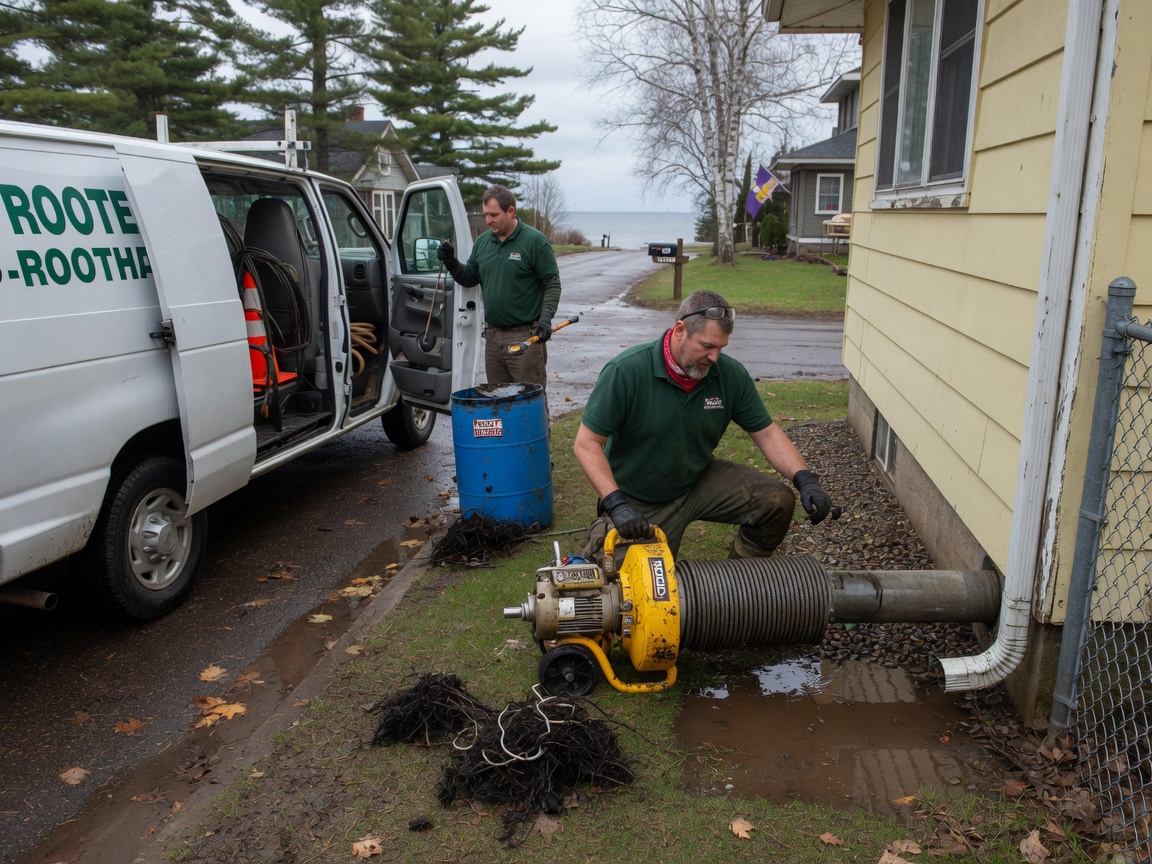
Park Point sits on a narrow sand spit between Lake Superior and the harbor, where high water tables and shifting sands create unique drain and sewer challenges. Older cottages and mid-century homes here often have shallow laterals that collect sand and debris, leading to slow drains or backups after heavy snowmelt. After Hours Sewer & Drain Cleaning provides 24/7 emergency response to clear lines fast before water rises into basements near the shoreline.
Access to Park Point runs across the Aerial Lift Bridge, so crews must time arrivals around bridge lifts and harbor traffic. Lake Superior winters drive deep frost even in sandy soils, and spring thaw sends extra water into already saturated ground. Our team uses camera inspections and targeted hydro jetting suited to these conditions rather than hillside clay methods used in Lincoln Park or Central Hillside.
Residents near Canal Park and the ship canal see grease and root issues from older cast-iron stacks mixing with I/I during wet weather. After Hours Sewer & Drain Cleaning keeps service trucks ready around the clock for Park Point calls, focusing on quick access through narrow lots and sand-heavy laterals that differ from west-side mill housing.
Around Park Point
We regularly work near:
- 📍Aerial Lift Bridge
- 📍Canal Park
- 📍Lake Superior shoreline
- 📍Minnesota Point
- 📍Park Point Recreation Area
Drain Cleaning in Park Point — Local Notes
- •Park Point sand and high water table allow faster infiltration during snowmelt than clay soils in the hillsides, requiring jetting focused on sediment rather than root cutting alone.
- •Narrow lots and bridge access mean service calls often involve smaller equipment to reach homes without blocking Minnesota Avenue or Lake Avenue traffic.
- •Lake Superior exposure creates deeper frost penetration on the point than in sheltered neighborhoods, increasing freeze-related drain issues in crawlspaces and shallow lines each winter.
- •High water table homes near the harbor edge need frequent checks for I/I after thaws, especially where older laterals sit close to fluctuating lake levels.