2026-08-26 · Dave Larson
Chester Creek Sewer Collapse: Why Camera Inspection Matters in Duluth
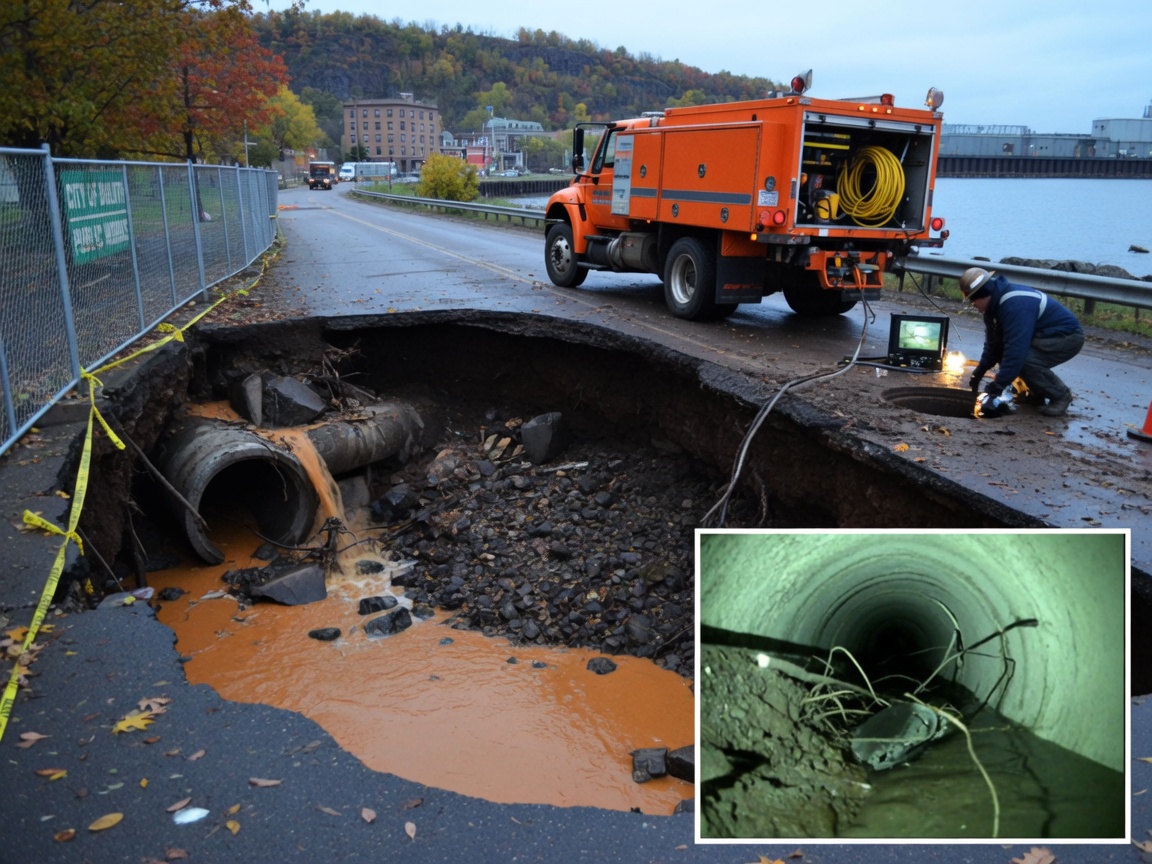
Camera inspection located the exact failure point of the 15-inch main at Kenwood Ave and College St, allowing crews to install a targeted CIPP liner rather than excavate the entire run along Chester Creek. This approach avoided weeks of disruption in a sensitive creek corridor while restoring flow before spring snowmelt increased inflow and infiltration. The same inspection logic applies to private laterals serving 1910s–1950s homes in Kenwood, Chester Park, Hunter's Park, and Morley Heights where clay pipe, cast-iron joints, and hillside settlement create identical failure points.
The October 2024 Chester Creek Collapse
City crews responded after the 15-inch sanitary sewer dropped into Chester Creek near Kenwood Ave and College St. WDIO and the City of Duluth reported that workers first performed camera inspection to map the break and assess surrounding pipe condition before choosing CIPP lining as the repair method. The failure occurred in an area where wet weather and snowmelt already push the city's 53 lift stations, showing how one main-line defect can compound system-wide I/I problems. Similar clay and cast-iron laterals on the surrounding hillsides face the same root intrusion and settlement stresses that likely contributed to the main collapse.
Why Camera Inspection Matters on Hillside Laterals
Hillside laterals in Kenwood, Chester Park, Hunter's Park, and Morley Heights run through shifting clay soils that settle unevenly after freeze-thaw cycles, cracking joints and allowing roots to enter. A camera run reveals these defects before they produce backups into basements during spring thaw or heavy rain. Without inspection, homeowners may only learn of problems after sewage surfaces, whereas footage lets crews target hydro jetting or sectional repairs on the exact segments affected. The Chester Creek event proved that visual confirmation prevents unnecessary excavation while confirming whether a line can accept a liner or needs full replacement.
Inflow, Infiltration, and Duluth's Sanitary System
Duluth's sanitary system experiences steady I/I from snowmelt and rain that enters cracked mains and laterals, especially on the hillsides above Chester Creek and in neighborhoods such as Lincoln Park, Denfeld, and Central Hillside. The 53 lift stations already handle elevated flows during thaw; a collapsed or root-blocked lateral adds volume that can push backups into nearby homes. Camera inspection distinguishes between grease, roots, and structural failure so repairs address the real cause instead of repeated clearing calls. The same pattern appears in older cast-iron stacks common to 1910s–1950s housing stock throughout East Hillside and Endion.
Practical Steps After a Suspected Lateral Problem
When slow drains or gurgling toilets appear, schedule a sewer camera inspection to document pipe condition before calling for sewer repair. Footage shows whether roots have penetrated clay joints or if settlement has offset sections, guiding the least invasive fix. Homeowners in Kenwood and Chester Park can also review the related article on light snow and frozen ground effects to understand how deeper frost this winter may worsen existing defects. Early inspection often prevents the full backups that follow heavy spring rain or rapid snowmelt.
After Hours provides 24/7 emergency drain and sewer service across Duluth, Hermantown, Proctor, Superior WI, and Cloquet. Call (218) 505-8183 for camera inspection or hydro jetting when hillside laterals show signs of trouble.